
The hidden nutrient driving algae blooms, fish kills, and long-term water quality decline — and how to break the cycle.
Phosphorus is a naturally occurring element essential to all living things. In aquatic ecosystems, it functions as the primary growth-limiting nutrient for algae and aquatic plants. In small quantities, phosphorus supports a healthy, balanced food web. The problem begins when concentrations rise beyond what the ecosystem can assimilate.
In limnology (the study of inland waters), phosphorus is widely recognized as the single most important nutrient driving eutrophication: the process by which a body of water becomes enriched with excess nutrients, leading to dense plant and algae growth, oxygen depletion, and ecological collapse. While nitrogen also plays a role, decades of research have established that phosphorus is the nutrient that controls algae growth in the vast majority of freshwater systems.
When phosphorus concentrations exceed approximately 0.03 mg/L (30 parts per billion), the system begins to shift. Algae populations increase. Water clarity decreases. Dissolved oxygen becomes unstable. And critically, the types of algae that dominate begin to change: beneficial green algae and diatoms are displaced by cyanobacteria (blue-green algae), many species of which produce toxins dangerous to fish, pets, livestock, and humans.
Understanding phosphorus isn't optional for anyone managing a pond or lake. It is the root cause behind recurring algae blooms, persistent green water, fish kills, foul odors, and long-term ecosystem decline. And the most dangerous thing about phosphorus is that its most damaging source is invisible: it's stored in the sediment at the bottom of your pond, releasing nutrients back into the water in a cycle that can persist for years or even decades.
Not all phosphorus is created equal. Total phosphorus (TP) includes every form present in the water: dissolved, particulate, organic, and inorganic. But the form that matters most for algae growth is soluble reactive phosphorus (SRP), also called orthophosphate (PO₄). This is the dissolved, inorganic fraction that algae and cyanobacteria can directly absorb and use for growth.
When a water test reports total phosphorus at, say, 0.15 mg/L, the actual bioavailable fraction might be 0.08 mg/L. But even that lower number is still more than double the threshold for problematic algae growth. The rest of the phosphorus isn't harmless either: particulate and organic phosphorus can be mineralized by bacteria into bioavailable orthophosphate over time, creating a sustained nutrient supply that fuels blooms long after the original source has been addressed.
This is why effective phosphorus management must account for all forms, not just the dissolved fraction that shows up on a standard water test. And it's why sediment testing (phosphorus fractionation) is so critical: the sediment contains phosphorus in multiple chemical fractions, each with different release potential depending on oxygen levels, pH, and temperature.
Phosphorus enters ponds and lakes from two fundamentally different pathways, and understanding the distinction between them is the key to effective management.
External loading refers to phosphorus entering the water from outside sources. These are the inputs most pond owners think of first, and they include agricultural and lawn fertilizer runoff, animal and waterfowl waste, septic system discharge, stormwater runoff, leaf litter and plant debris, and fish feed. In managed fisheries, fish feed is often the largest single external phosphorus input. Fish metabolize the protein and energy in feed but excrete a significant portion of the phosphorus, which enters the water column directly. The feed that goes uneaten decomposes on the bottom, adding to the organic sediment load.
Controlling external inputs is an important first step, but for most established ponds, it addresses only part of the problem. That's because the more damaging source has been accumulating for years beneath the surface.
Internal loading is the release of phosphorus from the pond's own bottom sediments back into the water column. This is the mechanism that most pond owners have never heard of, and it's the reason ponds with chronic algae problems rarely improve no matter what surface treatments are applied.
Every year that a pond exists, organic matter settles to the bottom: dead algae, uneaten fish feed, fish waste, leaves, pollen, and decomposing vegetation. This material forms the muck layer. As it decomposes, it releases phosphorus into the sediment, where it accumulates over time. Under normal, oxygenated conditions, much of this phosphorus stays bound to iron compounds in the sediment. But when the bottom water loses oxygen (a condition called anoxia), that chemical bond breaks. The iron releases its phosphorus, and the nutrient floods back into the water column, immediately available to fuel a new algae bloom.
Think of it as a bank account that's been receiving deposits for decades. Under the right conditions, the entire balance becomes liquid at once.
This is why surface-level treatments like algaecides and dyes provide only temporary relief. They treat the symptoms (the algae) without addressing the root cause (the phosphorus engine running beneath the surface). Until the sediment phosphorus is either bound in place or the conditions that release it are eliminated, the cycle will repeat every growing season.
The release of phosphorus from sediments is governed by a well-understood chemical mechanism called the iron-phosphorus redox cycle. In oxygenated sediments, phosphorus binds to oxidized iron (Fe³⁺) in a compound called ferric phosphate. This bond is stable as long as oxygen is present at the sediment-water interface.
When dissolved oxygen at the bottom drops to near zero (typically below 1-2 mg/L), a reduction reaction converts ferric iron (Fe³⁺) to ferrous iron (Fe²⁺). Ferrous iron cannot hold phosphorus. The bond breaks, and phosphorus is released in its dissolved, bioavailable form (orthophosphate) directly into the overlying water.
This process is temperature-dependent: warmer sediments release phosphorus faster. It's also pH-dependent: high pH (above 8.5, common in productive ponds during afternoon photosynthesis) can independently release phosphorus from aluminum-bound fractions as well. The combination of warm temperatures, low bottom oxygen, and high daytime pH creates a triple threat that maximizes internal loading during the very period when algae blooms are most dangerous: mid to late summer.
This is the mechanism that made the Slab Lab's fish kill inevitable. Years of heavy nutrient loading had built an enormous phosphorus reservoir in the sediment. The biological oxygen demand from decomposing organic muck kept the sediment layer chronically anoxic. And the resulting anoxia triggered massive phosphorus release, fueling a cyanobacteria bloom that consumed what little oxygen remained when a storm event rapidly mixed the water column.
If you've been treating your pond for algae year after year without lasting results, internal phosphorus loading is almost certainly the reason. This is the most misunderstood concept in pond management, and it explains why so many pond owners feel stuck in an endless cycle of treatment and re-treatment.
Here's the core problem: even if you eliminate every external phosphorus source entering your pond today (no more fertilizer runoff, no more fish feed, no more organic debris), the sediment at the bottom has already accumulated enough phosphorus to sustain algae blooms for years. Internal loading can contribute more phosphorus per day than all external sources combined.
The factors that trigger internal phosphorus release include low dissolved oxygen at the sediment-water interface (the single biggest driver), high water temperature (which accelerates chemical release rates), elevated pH from intense daytime photosynthesis, physical disturbance of sediments from wind, wave action, or bottom-feeding fish, and decomposition of organic muck by anaerobic bacteria.
When these conditions align, which they do in most ponds during summer, the sediment becomes a phosphorus pump. Nutrients flood the water column, cyanobacteria bloom, the bloom crashes and sinks, adding more organic matter to the sediment, which decomposes and releases still more phosphorus. This is the eutrophication feedback loop, and without direct intervention, it accelerates over time.
Most pond treatment approaches focus on the water column: algaecides kill existing algae, pond dyes limit sunlight penetration, and beneficial bacteria help decompose organic matter. These are all legitimate tools, and they have their place. But none of them address the phosphorus stored in the sediment. The algae will return as soon as conditions favor another release event.
Chemical treatments like copper sulfate actually make the problem worse over time. When algae die and settle, they add to the organic sediment layer, increasing the legacy phosphorus load. Each treatment cycle deposits more nutrients on the bottom. This is why ponds that have been treated with algaecides for years often have worse problems than when they started.
The only way to break the cycle is to directly address the phosphorus at its source: the sediment.
Effective phosphorus management starts with data. You cannot treat what you haven't measured, and standard water tests only tell part of the story. A comprehensive diagnostic approach requires testing both the water column and the sediment.
A professional water quality analysis should include total phosphorus, soluble reactive phosphorus (orthophosphate), nitrogen species (ammonia, nitrate, nitrite), pH, alkalinity, and dissolved oxygen. Critically, samples should be collected from both the surface and near the bottom. Surface samples alone can paint a misleading picture of pond health. At the Slab Lab, the team found nutrient levels at the sediment-water interface were significantly higher than at the surface, revealing the extent of internal loading that a surface-only test would have completely missed.
SlabLab for $20 off orders of $100+ at shop.naturalwaterscapes.comNot all algae problems are created equal. Green water might be dominated by beneficial green algae and diatoms, or it might be toxic cyanobacteria. The treatment approach and the urgency differ dramatically depending on what's actually growing. Species-level identification determines which toxins may be present, whether recreational use is safe, and which management strategies will be most effective.
At the Slab Lab, microscopic analysis identified two genera of cyanobacteria: Microcystis, a colony-forming planktonic species that produces microcystin (a liver toxin), and Phormidium, a filamentous benthic species that forms mats on the bottom and smothers invertebrate habitat. Neither is edible to zooplankton. Toxin testing through Greenwater Laboratories confirmed that anatoxin, microcystin, and saxitoxin were all present. No single toxin was at levels high enough to have directly killed the fish, but the combined and synergistic effects of all three in a stressed ecosystem remain an open question.
This is the test that changes everything. A sediment phosphorus fractionation quantifies how much reactive phosphorus is stored in the pond bottom and separates it into chemical fractions based on how readily each can be released into the water.
The test uses an Ekman dredge to collect a grab sample from the top few inches of the pond bottom. Unlike a core sample (which preserves vertical layering), a grab sample captures a homogenized section of the surficial sediment, which is the active zone where phosphorus exchange with the water column occurs. The sample is sent to a laboratory where it undergoes sequential chemical extraction, separating the phosphorus into loosely bound (immediately available), iron-bound (released under anoxic conditions), aluminum-bound (released under high pH), calcium-bound (relatively stable), and organic (released through bacterial decomposition) fractions.
This information is essential for two reasons. First, it reveals the true magnitude of the phosphorus problem. Standard water tests show what's in the water now. Sediment fractionation shows what's waiting to be released. Second, it enables accurate treatment dosing. Without knowing the sediment load, treatment calculations are guesswork.
A sediment phosphorus fractionation report typically presents results in milligrams of phosphorus per kilogram of dry sediment (mg/kg) for each fraction. Here's what each fraction tells you:
Loosely bound phosphorus is the fraction that can release spontaneously under almost any conditions. High values here mean the sediment is actively leaking nutrients into the water column regardless of oxygen status.
Iron-bound (Fe-P) is the fraction most sensitive to dissolved oxygen. This is the primary fraction that releases when bottom waters go anoxic. It's typically the largest reactive pool and the main target for both aeration (keeping it bound) and phosphorus binders (permanently sequestering it).
Aluminum-bound (Al-P) is generally more stable than iron-bound phosphorus but can release under high pH conditions (above 8.5-9.0). This fraction is particularly important in productive ponds where intense photosynthesis drives afternoon pH spikes.
Calcium-bound (Ca-P) is relatively stable and typically not a major concern for internal loading, though it can contribute under very acidic conditions.
Organic phosphorus is bound within organic matter and is released as bacteria decompose the muck. This fraction is addressed by biological treatments like beneficial bacteria and muck reducers that accelerate organic matter breakdown under controlled conditions.
At the Slab Lab, the fractionation revealed approximately 20 pounds of reactive phosphorus per centimeter of sediment depth in the top 10 centimeters, totaling over 1,000 pounds of phosphorus with the potential to release into the water. This number was essential for calculating the MetaFloc treatment dose required for a complete reset.
You can't manage what you don't measure. Log your water quality in MyPond and get plain-language, data-driven guidance — the same measure-first approach behind this reset.
Know Your Pond — Start Free → Watch the Slab Lab's live water quality → Free for up to 3 ponds · No credit card requiredOnce you understand the scope of the phosphorus problem, the question becomes: how do you get it out? There are several approaches, each with distinct advantages and limitations.
Alum has been the traditional go-to for phosphorus removal in lakes for decades, and it works: aluminum ions bind strongly with phosphate to form insoluble aluminum phosphate, which settles to the bottom. However, alum comes with significant trade-offs. It dramatically lowers water pH, which can be devastating to zooplankton and invertebrates, the very organisms at the base of the food web. It requires careful buffering with lime to prevent pH crashes. It only binds phosphorus in the water column, not in the sediment. Application involves handling caustic dry chemicals that require specialized equipment. And once settled, alum provides no ongoing biological activity. In a system like the Slab Lab, where the entire goal was to rebuild a functioning food web from the ground up, alum's pH impacts made it unacceptable.
Lanthanum-modified bentonite (LMB, marketed as Phoslock) binds phosphorus through a different chemical pathway than alum. Lanthanum ions react with dissolved phosphate to form insoluble lanthanum phosphate minerals, and the product is pH-neutral, which avoids the water chemistry disruption that makes alum problematic.
However, emerging research raises significant concerns about lanthanum bioavailability and bioaccumulation that any pond owner should understand before choosing this approach.
Although LMB is designed to keep lanthanum tightly bound within a clay matrix, laboratory studies have demonstrated that lanthanum released from the product can be taken up into multiple tissues of benthic organisms. In controlled experiments with marbled crayfish, lanthanum from LMB accumulated in the carapace, gills, hepatopancreas, ovaries, and tail muscle over 14 to 28 days, confirming that lanthanum released from the clay is bioavailable to bottom-dwelling crustaceans. While no acute mortality occurred during the study period, the researchers emphasized that chronic and multigenerational effects were not assessed and could still be ecologically meaningful.
Field monitoring tells a similar story. Long-term studies at Lake Rauwbraken in the Netherlands found that dissolved lanthanum in the water column increased directly after LMB application and remained elevated for months. Sediments accumulated substantial lanthanum concentrations, and elevated levels were detected in both macrophytes and chironomid (midge) larvae, demonstrating entry into benthic and littoral food webs. Resuspension and transport of clay particles created localized hotspots in the lake with enhanced exposure potential.
At a broader scale, chronic toxicity studies with Daphnia magna (the microcrustacean at the base of the food web in many ponds) show that lanthanides can cause sublethal effects on survival, growth, and reproduction at environmentally relevant concentrations. Because lanthanum applied for phosphorus control persists in sediments and biota over long timescales, several research groups now advocate precautionary use, comprehensive tissue-level monitoring (not just water chemistry), and explicit consideration of bioaccumulation when evaluating whether LMB is appropriate for a given site.
For pond owners managing fisheries or ecosystems where benthic invertebrate health is critical to the food web, and especially those rebuilding populations of zooplankton, chironomids, and crayfish, the long-term bioaccumulation risk of lanthanum is a serious consideration that chemical phosphorus binding numbers alone don't capture.
MetaFloc represents a fundamentally different approach: the first biological phosphorus removal product in the pond and lake management industry. It combines a flocculant component that immediately bonds dissolved phosphorus to suspended particles (settling them rapidly out of the water column) with proprietary beneficial bacterial cultures that continue binding phosphorus at the sediment surface after settling.
This dual mechanism is what sets biological phosphorus binding apart. Stage one addresses the water column, aggregating phosphorus-laden particles into heavy flocs that sink within hours. Stage two addresses the sediment, with bacteria creating a biological cap that makes legacy phosphorus unavailable to algae. Stage three reduces nitrogen levels in both water and sediment. And stage four breaks down organic matter, reducing the muck layer that serves as the phosphorus reservoir.
Critically, MetaFloc does not alter pH or alkalinity, has no water use restrictions, is completely safe for fish and all aquatic life, and continues working at the sediment-water interface long after application, something no chemical treatment can provide.
| Factor | Alum | Lanthanum Clay | MetaFloc |
|---|---|---|---|
| pH Impact | Significant drop | Neutral | Neutral |
| Zooplankton Safety | Harmful at dose | Sublethal effects reported | Safe |
| Water Column Binding | Yes | Yes | Yes |
| Sediment Binding | No | Limited | Yes — ongoing |
| Ongoing Biological Activity | None | None | Continuous |
| Water Use Restrictions | Yes | No | No |
| Nitrogen Reduction | No | No | Yes |
| Bioaccumulation Risk | Aluminum in sediment | Lanthanum in tissues & food web | None — biological |
| Speed of Action | Hours | Hours | Hours |
Effective treatment requires accurate dosing. Underdosing wastes product and fails to break the cycle. Overdosing wastes money. The correct dose depends on water volume, current phosphorus concentration, and sediment phosphorus load.
The MetaFloc Precision Dosing Calculator takes the guesswork out of treatment planning. It calculates exact dosing based on your pond's surface area, phosphorus levels, and treatment goals, whether you're targeting water column clarification, phosphorus removal, or sediment locking.
SlabLab for $20 off orders of $100+ at shop.naturalwaterscapes.comEverything discussed on this page played out in real time at the Slab Lab, a 5-acre trophy coppernose bluegill fishery in northern Alabama. The Slab Lab's story is a textbook case of what happens when phosphorus goes unmanaged, and what's possible when it's addressed with a science-driven approach.
In July 2025, a severe storm event rapidly mixed the water column, pulling anoxic bottom water loaded with ammonia and hydrogen sulfide to the surface and triggering a catastrophic fish kill that wiped out a nationally recognized trophy fishery. Years of heavy nutrient loading under a traditional "Green is Good" management philosophy had built an enormous phosphorus reservoir in the sediment. The green water that looked productive was actually dominated by toxic cyanobacteria (Microcystis and Phormidium) that zooplankton couldn't eat. All of that apparent productivity was a biological dead end.
The Natural Waterscapes team used sediment phosphorus fractionation to quantify the full scope of the problem. Based on the 1,000+ pound sediment phosphorus load, they calculated a reset dose of 5 totes (approximately 1,375 gallons) of MetaFloc, applied across all five acres via boat-mounted sprayers and surface aerator wash. Simultaneously, RapidBac was deployed for emergency ammonia conversion, and Muck Remover pellets were distributed to accelerate organic sediment breakdown at the bottom.
The transformation was measurable within hours and confirmed by laboratory analysis within days. The MetaFloc settled and formed a biological cap on the sediment, binding legacy phosphorus in place.
Six weeks post-treatment, the phytoplankton community had completely shifted from cyanobacteria-dominated to beneficial green algae and diatoms. Zooplankton populations exploded. Benthic invertebrate communities showed marked improvement in both size class and diversity. The food web was functioning.
The Slab Lab recovery demonstrates what's possible when phosphorus is addressed aggressively. But the real lesson is this: the crisis was preventable. Regular phosphorus management stops the buildup before it reaches critical levels. Here's what smart pond owners do.
Don't guess. A professional water quality analysis establishes your baseline and tracks trends over time. Test at least once per year, ideally in early spring (before the growing season) and mid-summer (during peak biological activity). If you manage a fishery with heavy feed inputs, quarterly testing is advisable. And if you've never tested your sediment, you may be sitting on a phosphorus time bomb without knowing it.
The most cost-effective time to apply a phosphorus binder is before you see algae, not after. As a general rule of thumb, a monthly maintenance dose of MetaFloc starting at 1 gallon per acre during the growing season prevents phosphorus from accumulating to levels that trigger blooms. However, this baseline rate should be adjusted based on your specific conditions: ponds with heavy agricultural runoff, high waterfowl pressure, active fish feeding programs, or significant stormwater inputs may require higher maintenance rates. Seasonal timing matters too — mid-summer peak temperatures and the fall turnover period are especially high-risk windows where increased dosing may be warranted. A water test can help dial in the right maintenance rate for your pond, and the MetaFloc Dosing Calculator can help you fine-tune application rates to your specific situation. Proactive maintenance is dramatically cheaper and more effective than reactive treatment after a crisis develops.
Reduce fertilizer applications near the shoreline. Manage waterfowl populations. Install vegetated buffer strips to filter runoff. If you're feeding fish, use high-quality feed that produces less waste, and monitor feed conversion rates to avoid overfeeding.
Keeping the bottom oxygenated is your first line of defense against internal loading. Oxygenated sediments hold their phosphorus. Anoxic sediments release it. A properly sized aeration system prevents the thermal stratification that creates anoxic bottom conditions in the first place.
If your pond has years of accumulated muck, consider a sediment treatment approach that combines MetaFloc for phosphorus binding with Muck Remover and Pond Cleanse for organic matter breakdown. This multi-pronged approach addresses both the nutrient load and the organic substrate that feeds it.
SlabLab for $20 off orders of $100+ at shop.naturalwaterscapes.comPhosphorus enters ponds from external sources like fertilizer runoff, animal waste, decomposing organic matter, and fish feed. However, the most significant and often overlooked source is internal loading: phosphorus stored in bottom sediments that gets released back into the water column under low-oxygen conditions. A single centimeter of nutrient-rich muck can contain pounds of reactive phosphorus. This internal recycling is the primary reason ponds with chronic algae problems never seem to improve.
For a healthy pond ecosystem, soluble reactive phosphorus (orthophosphate) should remain below 0.03 to 0.05 mg/L. Above 0.03 mg/L, phosphorus accelerates algae and aquatic plant growth. Levels above 0.10 mg/L indicate a hypereutrophic condition that typically produces severe algae blooms, oxygen depletion, and potential fish kills. The Slab Lab measured 1.3 mg/L of orthophosphate prior to treatment, more than 26 times the safe threshold.
Recurring algae blooms after treatment almost always indicate untreated internal phosphorus loading. Surface treatments and algaecides address symptoms but not the root cause. Phosphorus stored in bottom sediments continuously releases nutrients back into the water under low-oxygen conditions, restarting the algae cycle. Effective long-term control requires binding this sediment phosphorus and maintaining adequate dissolved oxygen at the pond bottom through proper aeration.
Effective phosphorus removal requires addressing both the water column and the sediment. Biological phosphorus binders like MetaFloc use a dual mechanism: a flocculant component that immediately binds dissolved phosphorus in the water column, and beneficial bacterial cultures that continue binding phosphorus at the sediment surface after settling. This approach is safer than chemical alternatives like aluminum sulfate (alum), which can crash pH and harm zooplankton.
Sediment phosphorus fractionation is a laboratory test that quantifies how much reactive phosphorus is stored in pond bottom sediments and how readily it can be released. The test separates phosphorus into chemical fractions: loosely bound, iron-bound, aluminum-bound, calcium-bound, and organic. This information reveals the true magnitude of your phosphorus problem (what's waiting to be released, not just what's currently in the water) and is essential for calculating accurate treatment doses. Natural Waterscapes offers a dedicated Sediment Phosphorus Fractionation Test, and their Pond Water Testing Service can help you understand your pond's full nutrient profile.
Yes. MetaFloc is completely safe for all aquatic life including fish, frogs, turtles, beneficial bacteria, and aquatic plants. Unlike aluminum sulfate treatments, MetaFloc does not alter pH or alkalinity. There are no water use restrictions after application: swimming, irrigation, livestock watering, and recreational use can continue immediately. The product works through nutrient management rather than direct toxicity, promoting a balanced ecosystem rather than eliminating organisms.
MetaFloc begins working immediately upon application. Visible water clarity improvement typically occurs within 2 to 4 hours as the flocculant component aggregates suspended particles and settles them. Maximum water clarity is usually achieved within 24 to 48 hours. At the Slab Lab, surface orthophosphate dropped from 1.3 mg/L to 0.02 mg/L — a 98% reduction — in less than 24 hours. The biological component then continues working at the sediment surface for extended periods, providing long-term phosphorus control.
Phosphorus is one piece of the puzzle. Explore the other factors that determine whether a pond thrives or declines.
Watch the full Slab Lab video series on YouTube — from fish kill to food web recovery, every step documented.
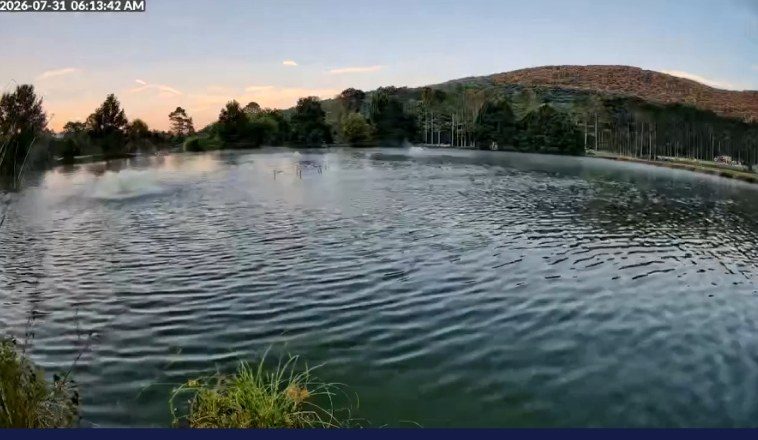
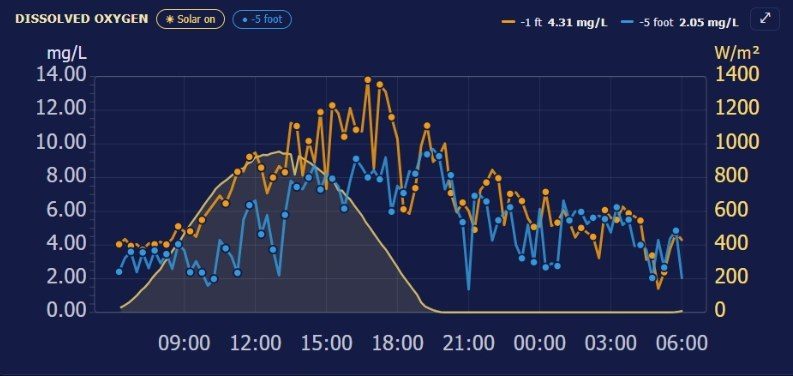
Watch the Slab Lab in real time — a live pond camera plus streaming dissolved oxygen at two depths, updated every 15 minutes.
DO now: 4.31 mg/L @ -1 ft · 2.05 mg/L @ -5 ft
Watch the Slab Lab LIVE